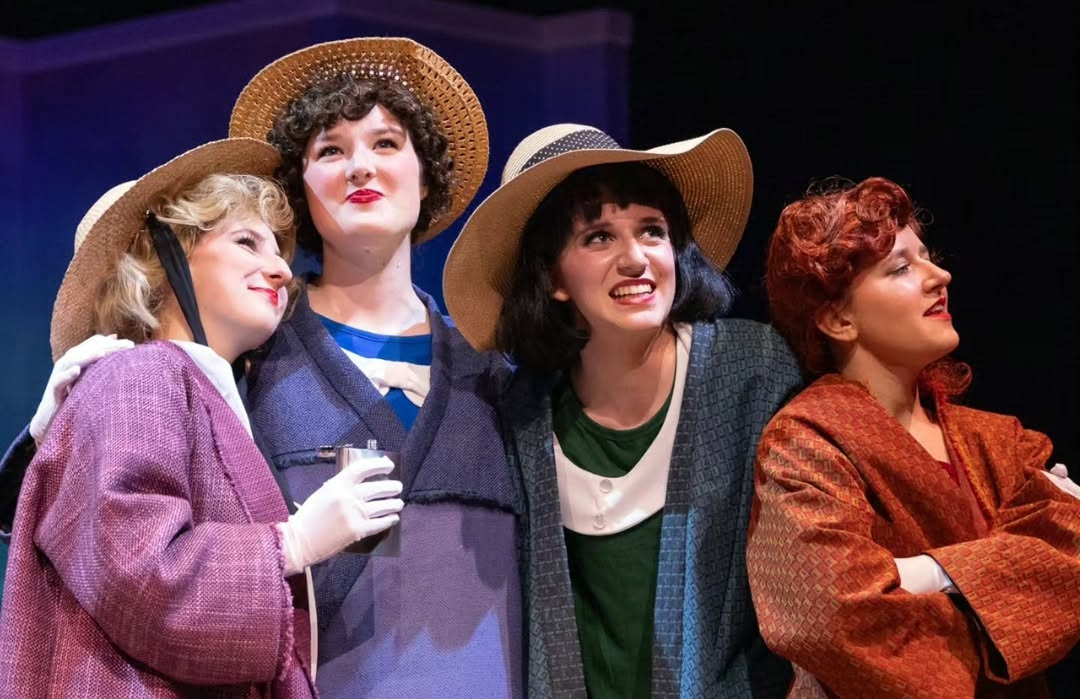
Saint Francis brought history to the stage with its production of “These Shining Lives,” which was performed Sept. 17-20.
The production – which included moments of humor, sadness and togetherness – provided the University community an opportunity to experience the story of women whose fight for justice became part of a larger movement for safer working conditions in America.
“These Shining Lives” is based on the true story of women known as the Radium Girls.
During World War I, several U.S. factories produced watches and military dials painted with radium, a radioactive element that glows in the dark. Hundreds of young women worked in these factories, applying radium to watches and dials.
After working in these factories, several of the Radium Girls became very sick and several died because of their exposure to it. For more than two years, the factory owners denied any connection between the women’s illnesses, deaths and their work.
Following a sharp downturn in sales, factory owners commissioned an independent study of the matter. Outside investigators concluded that the women had died and become seriously ill from the effects of radium exposure.
Their experiences and legal battles became important milestones in the history of workers’ rights and occupational safety in the United States. Their fight helped lead to workplace protections that, decades later, would include the creation of the Occupational Safety and Health Administration.
For the performers involved in the SFU production last month, telling a story about real people was a real challenge.
Ada-Leigh Irwin – who played Reporter 2 and Daughter Sally – said the history behind the production was part of what made her want to participate.
“I wanted to be involved because it is a powerful show,” Irwin said. “We are talking about people’s real lives, not just a made-up story.”
Irwin said the hardest part of preparing for the production was “getting the emotions correct in the scenes.”
Irwin said she is inspired by the Radium Girls’ story. She said it demonstrates how people working together can create change that lasts beyond their lives.
Abbigail Borbonus attended one of last month’s performances and described the show as “emotional.”
“It was funny at times, but it was dark too, and it made me sad at the end,” said Borbonus.
Borbonus said that the production provided attendees with a different way to connect with the past. She said one of the takeaways from the show was to “learn about history on a more emotional level.”