Saint Francis has been awarded a $338,539 grant from NASA as part of its Collaborative Opportunities for Mentorship, Partnership and Academic Success in Science (COMPASS) Program.
COMPASS is a nationwide initiative launched by NASA that provides opportunities for funding and collaborations between NASA centers and colleges and universities. Its goal is to advance NASA’s scientific priorities and train students to work in the sciences.
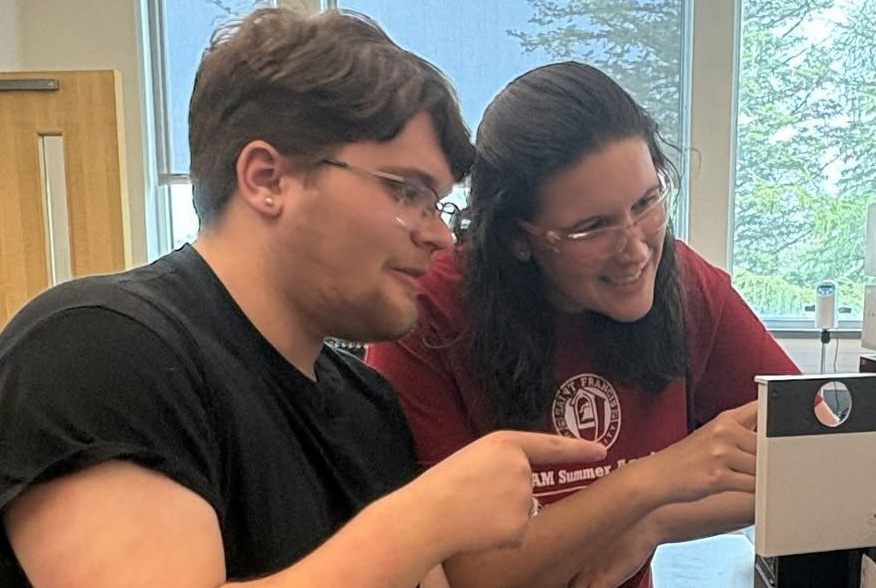
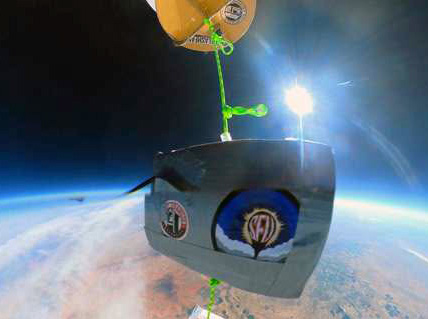
The grant will assist with the Near-Space Ballooning, High-Altitude Student Platform (HASP) and Ground Sensing projects.
“Students don’t have to attend a large research university to make meaningful contributions to space science,” said Fr. Malachi Van Tassell, president of the University, in a press release following the announcement of the grant last month.
“This partnership with NASA demonstrates that students from rural Pennsylvania can contribute to scientific research of national significance while preparing for careers that will shape the future of space exploration.”
Physics Associate Professor Lanika Ruzhitskaya led the effort to secure the grant.
“What is more fun than space?” said Ruzhitskaya. “I think human nature is to explore. And this is something new that we’re exploring.”
The grant will create new opportunities for students studying the sciences at Saint Francis, as well as for students pursuing degrees in other disciplines at the University.
“We need students to help us with all sorts of different components that are not necessarily highly technical,” said Rachel Wagner, Department Chair of Math, Engineering and Computer Science. “We had an Education major come and join the National Eclipse Ballooning team.
“That was really, really valuable for her as a learner and for the rest of the team to get more perspective than just the Engineering perspective.”
The projects that SFU students will participate in thanks to this grant aim to “explore the way that certain space activities – like solar flares – interact with the ionosphere of the earth’s atmosphere,” said Wagner.
SFU has already collaborated with NASA through its CubeSat Program. This project involves the launching of small 10x10x10 centimeter cubic satellites into the atmosphere. These satellites collect data during their travels that is then analyzed by students.
Wagner said that this NASA grant will allow SFU faculty and students to expand on the goals of the CubeSat project.
“We now have the opportunity to launch with NASA what we call a three-unit, or a 3U CubeSat,” said Wagner. “That will be three of those 10x10x10 blocks.”
COMPASS prioritizes collaborations with schools that have not traditionally been funded by NASA. The organization’s goal is to provide funding and research opportunities to a wide range of students and researchers, as opposed to a select group of “repeat players.”
“On this most recent high-altitude student platform that we launched,” said Wagner, “I think there were only 22 other projects that launched.
“Saint Francis was one of 22 other payloads that was able to launch with NASA on this large stratospheric balloon in September.”