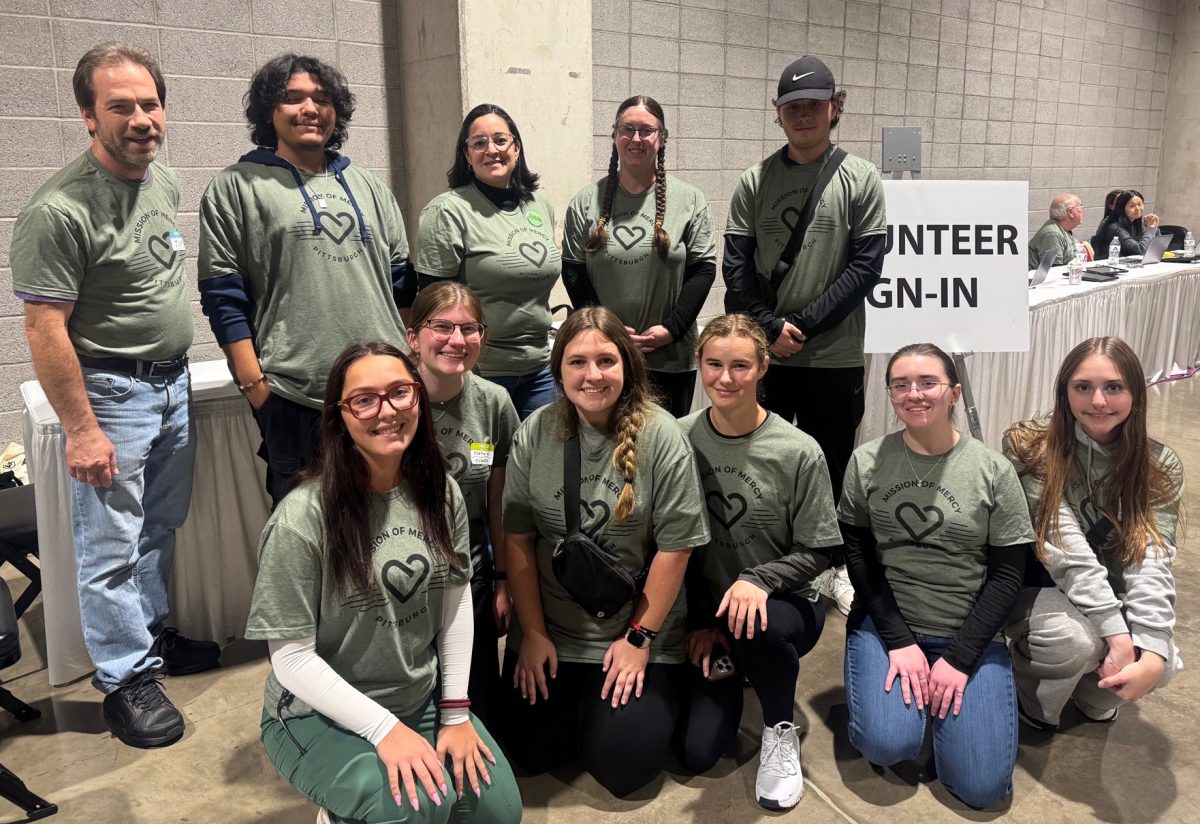
Several SFU students and faculty members volunteered at Mission of Mercy, an annual, two-day medical charity event at the David Lawrence Convention Center in Pittsburgh on Oct. 24-25.
Mission of Mercy provides free dental, vision and hearing services to thousands of people in need. Patients do not need to provide proof of insurance, nor do they need to be employed or American citizens.
Students volunteered as patient ambassadors, general volunteers and translators. Mission of Mercy provides services to hundreds of immigrants every year.
Translators are in high demand. Each year, SFU brings several Spanish translators to the event. This year, six students and two faculty members served as translators.
As a double-major in Spanish and Communications here at SFU, I always look forward to this event. It is the perfect opportunity to improve my communication skills at a bilingual level.
Jen Spacht, a sophomore majoring in Spanish and Education, participated in last month’s mission trip. She said that helping people get the care that they need is the true reward.
“I think it’s significant to help people get the healthcare they need, that they otherwise wouldn’t be able to get easily, if at all.”
Because thousands of people seek care at Mission of Mercy, patients typically wait for hours to be seen by doctors.
The event ran across two days from 6 a.m. to 5 p.m. each day. Hundreds of people waited outside the convention center all night to get a spot in line. This waiting time allowed the volunteer translators to bond with the families they met.
This year, I met a family of five from Venezuela and I spent most of the first day with them. They shared information about Venezuelan food, slang and music. I also played games with the children in the family.
Associate Professor of Spanish Larissa Clachar volunteered at the event. She highlighted the significance of using Spanish skills to connect with people on a personal level.
“I always appreciate the stories I hear from people who attend,” said Clachar. “I am amazed by what people have gone through.
“This year, I got to work with a Colombian family who shared their story.”
Professor of English Tim Bintrim also volunteered at last month’s mission trip, as well as other Mission-of-Mercy events in the past. He appreciates watching patients and translators interact.
“Translators remove the language barrier and improve care, although many of the providers have some Spanish skills,” he said. “I see folks unclench when they meet someone who speaks their language.”
Volunteering at Mission of Mercy reminds me of why language is important. Being bilingual is more than understanding grammar and vocabulary. It is about forming connections with people who I would not be able to connect with otherwise.
The families that we work with often find it difficult to adjust to life in the United States because of the language barrier. As translators, we are able to break these barriers and give them a sense of community, even if it’s just for one weekend.